

 English
 Danish
 French
 Swedish
 Vietnamese
 Spanish
 German
 Polish
 English





Download
Leaflets and data sheets
Producing your own feed gives you greater control over the raw materials you use, how feed is formulated and when it is produced. It can also give you greater flexibility to adapt feed production to your animals, available raw materials and changing market conditions.
But on-farm feed production is not the right solution for every farm. Feed volume, raw material availability, storage capacity, investment, automation and management resources all play a role.
SKIOLD designs complete feed milling solutions for poultry, pigs, cattle and sheep and goats – from simple on-farm systems to larger, highly automated feed mills with capacities from a few t/h to 30-40 t/h.
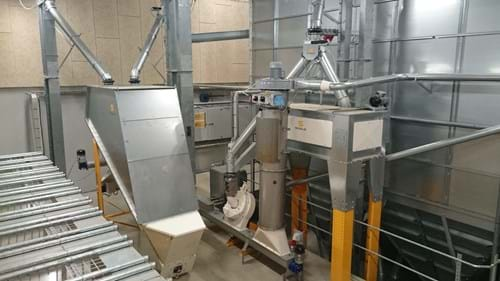
Take control of the raw materials, recipes and processes behind your feed production.
Use your own crops, selected ingredients and available raw materials according to feed requirements and market conditions.
Greater control over raw materials, formulation, production and logistics can create opportunities to optimise feed costs.
Adapt recipes and production to different animal groups, feed requirements, raw materials and changing conditions.
Connect processes from raw material intake to finished feed, reduce manual handling and improve control and traceability.
Choose a solution based on your feed volume, raw materials, storage, production requirements, available space and future needs.
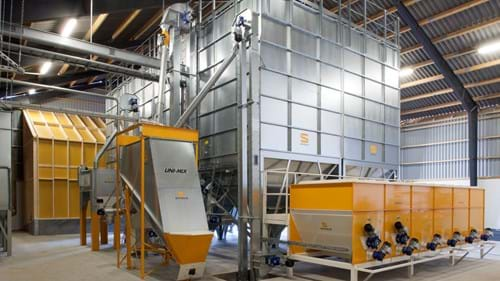
On-farm feed production may be worth considering when you:
It may be less suitable when feed consumption is low, raw materials are difficult or expensive to source, storage capacity is limited, or there are insufficient resources to manage feed production and feed safety.
The business case depends on the individual farm, including feed volume, raw material prices, logistics, investment and operating costs, storage capacity and the level of automation required.
[Download the whitepaper: Complete On-Farm Feed Mill]
A complete feed mill connects several processes to turn raw materials into consistent finished feed.
RAW MATERIALS → STORAGE → CLEANING → GRINDING → PROPORTIONING → MIXING → PELLETING → STORAGE / FEED DELIVERY
Not every farm needs every process. The right configuration depends on the raw materials, feed types, required capacity and production goals.
No two feed production setups are the same. The right solution depends on your production, raw materials, feed types and available facilities.
When designing a feed mill, we consider factors such as:
From simple on-farm installations to larger automated feed mills, the solution can be configured around your actual requirements.
👉Read more: How to Design a Feed Mill
👉 Learn more about horizontal feed mill design
Produce feed adapted to different stages of pig production, from sows and piglets to growers and finishers.
→ Produce your own feed for pigs
Adapt feed formulations and production to the different stages and requirements of poultry production.
→ Produce your own feed for poultry
Combine available raw materials and concentrates according to the requirements of your cattle production.
→ Produce your own feed for cattle
Adapt feed production to the nutritional requirements of sheep and goats and the conditions of your production.
→ Produce your own feed for sheep and goats
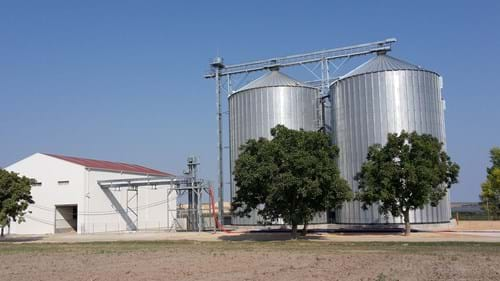
SKIOLD designs complete feed milling solutions based on the individual requirements of each farm.
From raw material intake and cleaning to grinding, proportioning, mixing, pelleting, storage and production control, the system can be configured around your production and expanded as your requirements change.
With more than 150 years of experience in agriculture, SKIOLD combines feed milling technology with practical knowledge of livestock production.
See how feed milling solutions are used in real-world livestock production.
Feed mill for 1,400 dairy cows at Andekærgaard
Accurate feed mixing, healthier cows and higher yields.
Curious about how other farmers have gained from on-farm feed production?
Click here to read about our satisfied customers' solutions here
Whether you are exploring the possibilities or already planning a feed mill, SKIOLD can help you assess the right solution for your production.
Talk to our feed specialists:
